|
Cybertelecom Federal Internet Law & Policy An Educational Project |
|
Telegraph :: Invention | |
© Cybertelecom ::"Throughout the remainder of the nineteenth century the telegraph became one of the most important factors in the development of social and commercial life of America." - Smithsonian.
"You see, wire telegraph is a kind of a very, very long cat. You pull his tail in New York and his head is meowing in Los Angeles . Do you understand this? And radio operates exactly the same way: you send signals here, they receive them there. The only difference is that there is no cat ." - Albert Einstein, explaining radio
"Many things which at first seemed preposterous, have proved to be not impracticable, but eminently important and valuable." - Pittsburgh Gazette 1850s [Branch p. 29]
Telegraph changed everything. Telegraph was a new communications medium which offered a new speed of information transmission. Telegraph service was a new business model... sort of... at least in the United States: private commercial communications service. Large nationwide corporations of any type were novel. National monopolies were also new. The government had confronted the problem of government interference and manipulation of intelligence over the legacy communications medium; now policy would confront corporate interference and manipulation of intelligence over electronic networks. This placed the government in a new role: regulatory oversight of communications. Everything had to be invented.
Innovative telegraph service disrupted and was a substitute service for the legacy Postal Service. Would novel telegraph be treated the same as legacy postal service? At first the answer was yes, then it was m'eh, then it was yes again, and the no. It's true that telegraph service was a step forward towards private commmercial offering of communications service, but it was only one step. One foot remained firmly planted in the US Government while the other stepped foward into the market. In the era of Manifest Destiny, the government needed telegraph to build the new nation. Telegraph service arose as a government-funded private corporation, receiving massive value from the government in the form of land grants, materials, assistance from the US military, access to rights of way, and government contracts. Telegraph service was fundamentally an "overbuild network," built on top of the postal communications network of post roads. Telegraph was at first operated by the Post Office, then as private corporations (with a provision in franchise agreements that anticipated government acquisition), then as government contractors, then as an arm of the US War Department during the Civil War, then again as government contractors under the oversight of the Post Office, and once again as part of the US Government during World War I. Telegraph service continued to be entangled with the US Government, in one form or another, until telegraph service itself was disrupted by an innovative substitute service, telephone service.
Government funding of telegraph service
- 1837: USG funds study of construction of optical telegraph network.
- 1842: USG funds Morse's first experimental telegraph line
- 1842-1847: USG Post Office operates initial telegraph service
- 1850s: USG funds under-ocean cables; claims priority use and free service; deploys US Navy to explore potential telegraph routes
- 1860: USG contracts for the first transcontinental telegraph line. Gives telegraph service value in the form of land grants, materials, and government contract.
- 1862: USG funds transcontinental railroad and telegraph. Claims priority use. Multiple statutes are subsequently enacted funding railroad and telegraph lines.
- Civil War: North and South seize control of telegraph; North's US Military Telegraph Corp is run by Western Union superintendent; South's telegraph is controlled by Director of Southern Telegraph. North builds 15,000 miles of telegraph lines which it gives Western Union while destroying Western Union's competitors' lines in the South.
- 1866: Post Roads Act contracts for expansion of telegraph service. Gives telegraph companies value in form of land grants, access to right of way, and government contracts. Reserved USG right to nationalize telegraph companies. Telegraph companies operated under supervision of Post Office.
- 1918: WWI Telegraph and telephone are nationalized and placed under authority of Post Office
Optical telegraph service was initiated in Europe to support military interests, particularly those of the French revolution. Electronic communications likewise was initiated as government service. [Barnard at 120 ("Governments, well aware of the advantage which they might derive from this art, in ascertaining the wants of the people and in repelling attacks from without, readily adopted the mode of corresponding by means of the Telegraph.")] In Europe, telegraph service was generally operated through postal services, with priority for government traffic. [1934 Com. Study at 5 ("The external communications of practically every large country in the world are either private monopolies under Government control or are owned or operated by the Government itself. ")] [ITU2015 p. 9 (Britan was the exception, with privately owned telegraph service, which caused a kerfuffle when joining the ITU)]
In the United States, the new nation looked to the technological advances in Europe and wanted in. But this was antebellum United States. The country was still young and still took on the character of a confederation of states. But both commerce and war drove necessity. The USG studied building its own optical network - and some small networks were built - but Morse suggested something different, electric telegraph. Morse had always intended on following the European model, selling his invention to the US Government, and having telegraph service operated by the Post Office. But a combination of expense of constructing the service and the growing conflict between industrial North and agrarian South derailed the government's interest in the project.
There was continuous pressure to return telegraph to the control of the Post Office. Morse's licenses to private companies setting up telegraph lines included a provision in the franchise agreement that anticipated government acquisition. During the Civil War and World War I the government did seize control of telegraph. The Post Roads Act of 1866 included a provision authorizing government take over of telegraph. Every congress, legislation was introduced proposing government operation of postal service. Gardiner G. Hubbard, the soon-to-be financial backer of Alexander Graham Bell, arduously petitioned for government ownership of telegraph service. In 1914, at the request of Congress, the Post Office issued a report recommending government take over and operation of telephone and telegraph service. Telegraph service would be overseen by the U.S. Postal Service, War Department, Interstate Commerce Commission, State Department (undersea cables) and finally the Federal Communications Commission.
Telegraph heralded a new utopian age. Telegraph service with its free flow of information promised to bring nations together and foster a new era of world peace. The Chief Justice of California, upon the completion of the Transcontinental Telegraph, praised the wire for binding together the nation. Upon the completion of the first trans-Atlantic line, the President of the United States and the Queen of England exchanged pleasantries, proclaiming the affections of the two former waring nations. Artistic renditions of telegraph service from the time were highly idealized, with golden art-deco depictions showing a glorious new world. As its value was realized, telegraph service became a strategic military tool and a vehicle for uniting a Westwardly expanding nation.
Telegraph brought other innovations. Telegraph heralded the age of news-by-wire, leading to the creation of new dissemination associations such as the Associated Press. This led to a new country-wide discussion of national issue, as well as discrimination by the wire service in favor on one news service, and discrimination by the news service in favor of one political party. Telegraph brought the first online games, cybercrime, as well as, as explained by the Count of Monto Cristo, fake news. Telegraph service introduced new privacy concerns which created demand for encryption, new surveillance and security concerns, and even a new concept, the Kill Switch. Telegraph also presented a new market dynamic of consolidation and collusion among competitors.
Also at issue was whether telegraph constituted "common carriage." At first, the operation of telegraph service by the postal service, the agency in charge of postal carriage, was unquestioned. But in time, it was questioned. After all, unlike railroads which were the paradigm common carriers of the time, telegraph networks transmitted intelligence, not goods. There was no bailment relationship between the service and the customer.... was there? The network could damage the goods if it garbled the message.... what would its liability for carriage be then? The network also had both the opportunity and financial incentive to favor certain customers over others; discrimination between customers became a point of consternation. Finally, rates.... particularly when compared to Europe... appeared high. The prices of telegraph varied across the country and appeared to damage use of telegraph service when compared to Europe. The courts would grapple with the question of telegraph service liability which Congress addressed discrimination and rate-standardization with legislation.
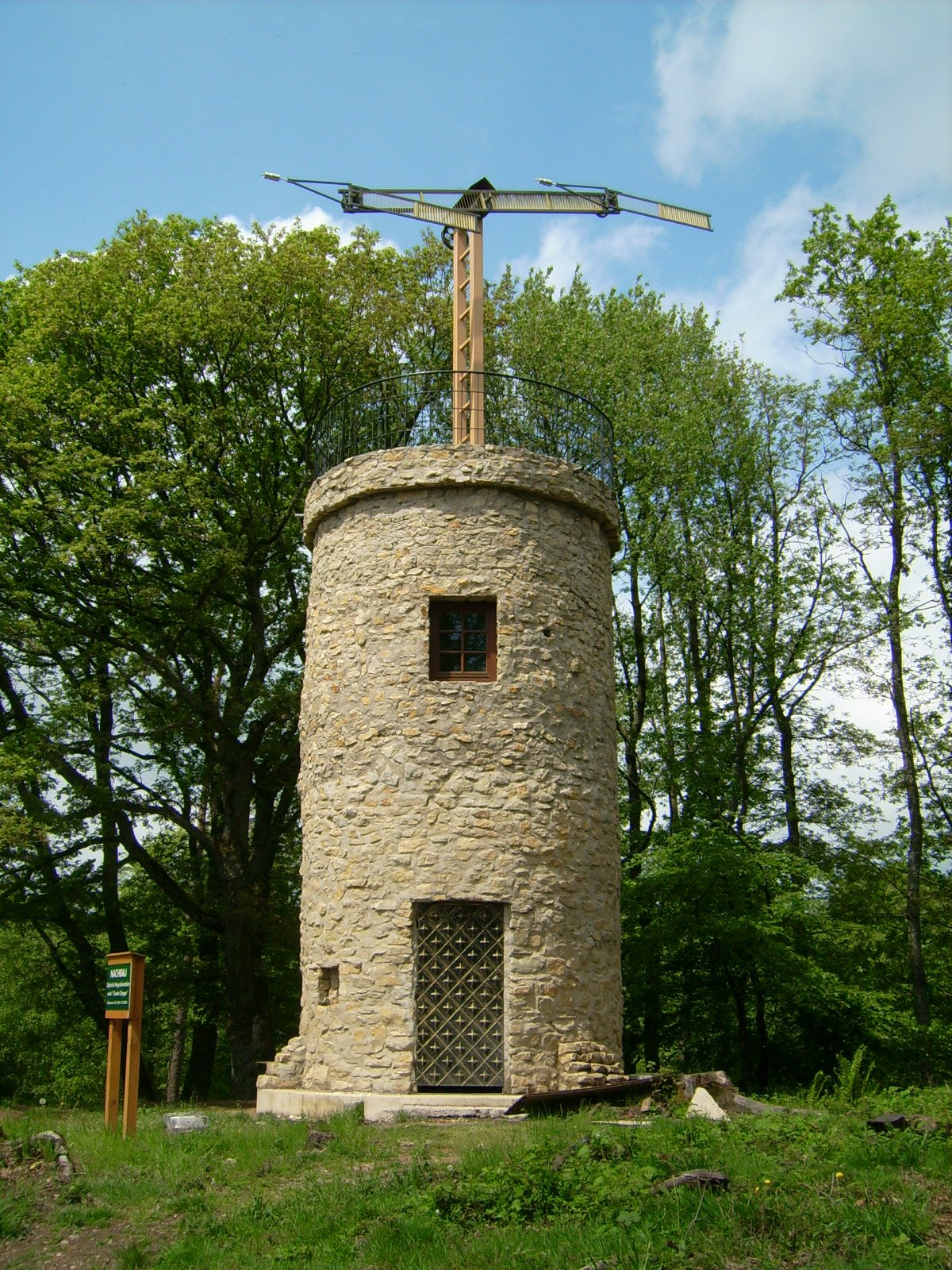
Government Optical Telegraph Networks
Source: WikipediaIn 1789, the French Revolution began, creating demand for communications. In 1791, Claude Chappe demonstrated his optical telegraph technology, in Brulon France over a distance of 10 miles with message "If you succeed, you will bask in glory." [Standage 9] [Decker] [Nonnenmacher] [ITU2015 p. 8] [Reid at 3 (According to Reid, the Chappe brothers were at three different boarding schools, all within sight of each other, but were forbidden to talk with each other. They invented the semaphone so that they could converse.)] . Telegraph service had the advantage to the Revolution not only of speed but also of not being owned by by the incumbent Postal Service with loyalties to the Monarchy. The first telegraph services were government communications networks, transmitting significant military news. [Grier ("After the executions of Louis XVI and Marie Antoinette in 1793, the revolutionary government decided that it needed a national communication network under its own control. At the time, the only long-distance communication was the postal service, which had been organized by Louis XIV and remained heavily influenced by the royal family, the aristocracy, and the clergy-three groups that were enemies of the revolution and hence not to be trusted. Chappe's optical telegraph removed the enemies of the revolution from the communications system.")] [Field at 246]
1793: July 12: Optical Telegraph network, sending a message between three towers, demonstrated
1794: Claude Chappe builds semaphore optical 'telegraph' system throughout France. Stations are located ~10 miles apart; signaling arms are used to to send signals visually to the next station. Network operated by government. [PBS The Great Transatlantic Cable][Decker][Standage13]
1795: Britian initiates construction of optical telegraph service.
1799: Taking power, Napoleon orders expansion of telegraph network. [Scholfield]
1803: "Semaphonic signal-houses and signals were rapidly established along the whole French coast, in 1803, with Chappe as manager." [Reid at 3]
1807 "Beginning in 1807 and continuing through the next three decades, there were repeated attempts to get Congress to vote funds to build and operate a U.S. system using French technology. " [Field at 246]
1815: French Monarchy is restored. Military demand for telegraph communications diminishes. [Scholfield]
1826 Optical telegraph lines operated in Europe, and in a few locations in the United States: New England, Philadelphia, and San Francisco [Starr p 157][Wired Prof][Standage16] [Barnard 120 (1837: "Messrs Servel and Gonon are making arrangements to establish a system of telegraph communications in all States, north and south")]
1844: Electronic telegraphy demonstrated.
1848: Last optical telegraph station built. "In less than 50 years time the French government built a national infrastructure with more than 530 towers and a total length of almost 5,000 kilometres." [Decker] [ITU2015 p. 9 (connecting 29 cities)] [Schofield (with map of network)]
1849: Last French Chappe station constructed. [Schofield] Optical telegraph is constructed on a hill in San Francisco, in order to signal to the city the nature of the ships entering the harbor. Hill comes to be known as "Telegraph Hill". [Telegraph Hill, Office of Historic Preservation]
French network technology would again be disrupted by subsequent American network technology 100+ years later. In 1980, France deployed the commercial computer service Minitel; Minitel would be disrupted by the American Internet which became publicly commercially available in the 1990s. 1853: Electronic telegraph disrupted optical telegraph service. [Decker "The optical telegraph disappeared as fast as it came. This happened with the arrival of the electrical telegraph, fifty years later. The last optical line in France was stopped in 1853, in Sweden the technology was used up to 1880. The electrical telegraph was not hindered by mist, wind, heavy rainfall or low hanging clouds, and it could also be used at night."] [Scholfield] [ITU2015 p. 9 (By 1855 electric telegraph network had displaced optical telegraph network)] However, particularly in Europe, optical telegraph networks established the foundation of telegraph as a government service, that will be run by post offices.
Hacking Communications in Literature
"Yes, a telegraph. I had often seen one placed at the end of a road on a hillock, and in the light of the sun its black arms, bending in every direction, always reminded me of the claws of an immense beetle, and I assure you it was never without emotion that I gazed on it, for I could not help thinking how wonderful it was that these various signs should be made to cleave the air with such precision as to convey to the distance of three hundred leagues the ideas and wishes of a man sitting at a table at one end of the line to another man similarly placed at the opposite extremity, and all this effected by a simple act of volition on the part of the sender of the message." - Count of Monte Cristo
The telegraph is a recurring theme within the book. In striking his revenge, the Count bribes a telegraph operator to transmit false information through the network. The false message leads to the financial ruin of one of the men who wronged The Count. In creating this story of revenge, the author Alexandre Dumas introduces social engineering, fake news, and spoofing. [Grier] [Schofield]
Invention of the Electric Telegraph
Prof. Joseph Henry testified: "the first fact of electro-magnetism was discovered by Oersted, of Copenhagen, in that winter (1920), and was widely published, and the account everywhere received with interest.... [Henry] commenced his researches in 1828, and pursued them with ardor and success, from that time until the telegraph of Professor Morse was established and in actual operation. And it is due to him to say that no one has contributed more to enlarge the knowledge of electro-magnetism, and to lay the foundations of the great invention of which we are speaking, than the professor himself... And before the year 1823, Ampere of Paris, one of the most successful cultivators of physical science, proposed to the French Academy a plan for that purpose. But his project was never reduced to practice. And the discovery made by Barlow, of the Royal Military Academy of Woolwich, England, in 1825, that the galvanic current greatly diminished in power as the distance increased, put at rest for a time all attempts to construct an electro-magnetic telegraph. Subsequent discoveries, however, revived the hope, and in the year 1832, when Professor Morse appears to have devoted himself to the subject, the conviction was general among men of science everywhere that the object could, and sooner or later would be, accomplished." [O'Reilly, 56 U.S. at 107] 1774: La Sage, a Frenchman, attempts transmission of signals by electricity. [Census 1852 107]
1827: "in ingenious citizen of New York, Harrison Gray Dyar, erected a line of telegraph, two miles in length, on a race-course on Long Island. He used a single wire, and obtained marks on litmus paper by discoloration, by means of the current." [Reid at 18]
1829: Joseph Henry
Joseph Henry, future secretary of the Smithsonian Institute, experiments with electromagnetism and batteries. Publishes his work in Benjamin Silliman's American Journal of Science in January 1831 – which is read by Morse. Demonstrates an early telegraph, connecting a battery over a mile of wire to an electromagnet which would tap a bell. [Encyclopaedia Britannica 1889 at 650 ("About the year 1827 Prof Joseph Henry began a series of experiments in the attic of the Boys Academy building in Albany, N.Y. among which was included the running of a wire about the room, and the sending of signals from one end to the other by means of an electric current.") ] [Wheeler 18] [Hochfelder, Joseph Henry ("By using a pole-changer to cycle the electromagnet's polarity, Henry caused the permanent magnet to tap a small office bell. He consistently demonstrated this arrangement to his classes at Albany during 1831 and 1832. ")] [Census 1852 107 ("While the honor is due to Professor Morse for the practical application and successful prosecution of the telegraph, it is mainly owing to the researches and discoveries of Professor Henry, and other scientific Americans, that he was enabled to perfect so valuable an invention." )] [Reid at 19 ("The most important advance made in the evolution of the coming telegraph, and respecting which invention seemed to have thoroughly roused herself, was in 1828, by the distinguished Secretary of the Washington Smithsonian Institution, Professor Joseph Henry, at that time Professor of Physics in the Albany Academy… Professor Henry is regarded as the first to employ the insulated wire of many coils, to construct an electro magnet.")].
Henry and Morse meet and correspond, with Henry providing advice to Morse about electromagnetism. [Stromberg]
During the challenges to Morse' patents, Henry is subpoenaed as a witness for prior art. The relationship between Morse and Henry strains. [Hochfelder, Joseph Henry ("Between 1849 and 1852 the defendants in three infringement suits subpoenaed Henry in the hopes that his statements would weaken or invalidate Morse's claims, and his testimony proved crucial to the Supreme Court's 1854 split decision that struck down Morse's broadest claim.")]
Samuel Morse
Samuel Morse was an artist by training and choice of profession, not a businessman. At the time of his fateful trip to Europe, he was President of the National Academy of Design in New York. He took his 1929 trip to Europe to study art and interact with the artist community. In 1835, while developing his telegraph invention, Morse is hired as professor of art at New York City University, providing him with funds to conduct his telegraph experiments. Electricity, telegraphy, and inventing were not things that Morse had spent his time on up to this point. [Reid at 36] [O'Reilly, 56 U.S. at 70] [Reid at 39 ("Hitherto he had felt no other interest in electrical matters than that of a lively and excited curiosity.")] [Reid at 77 ("Morse's entrance into the circle of inventors was sudden and unexpected.")] [Sketch by Morse, Diaries---22 December 1829-3 May 1830 (Series: Diaries and Notebooks) LOC]
1825
Morse receives a letter that his wife is ill. By the time he receives the letter and returns to New Haven, she is already dead. [Letter to Morse from his father about the death of Morse's wife, 8 February 1825, Bound volume---9 December 1823-9 February 1828 LOC] [Stromberg "Stricken by grief, he vowed to develop a faster way to send messages in such crucial circumstances."]
1832
Samuel FB Morse conceives of idea of electromagnetic telegraph during a return voyage from France. During the long voyage home, he participates in discussions with Dr. Charles T. Jackson, who discussed the electromagnetism lectures he had attended while in Paris. Morse, in his response to Sec. Woodbury in 1937, described the voyage as follows:
About five years ago, on my voyage home from Europe, the electrical experiment of Franklin, upon a wire some four miles in length, was casually recalled to my mind in a conversation with one of the passengers, in which experiment it was ascertained that the electricity travelled through the whole circuit in a time not appreciable, but apparently instantaneous. It immediately occurred to me, that if the presence of electricity could be made visible in any desired part of this circuit, it would not be difficult to construct a system of signs by which intelligence could be instantaneously transmitted. The thought, thus conceived, took strong hold of my mind in the leisure which the voyage afforded, and I planned a system of signs, and an apparatus to carry it into effect. I case a species of type, which I had devices for this purpose, the first week after my arrival home; and although the rest of the machinery was planned, yet, from the pressure of unavoidable duties, I was compelled to postpone my experiments, and was not able to test the whole plan until within a few weeks. The result has realized my most sanguine expectations.[Woodbury at 29 (quoting Morse)] See also [O'Reilly, 56 U.S. at 68] [Smithsonian] [Starr at 158] [Reid at 39] [Stromberg] [Electrical World 1903 at 115 (Jackson claimed that Morse copied his ideas for the telegraph from Jackson during the voyage)]1835
Morse joins anti-immigrant movement. Publishes Foreign conspiracy against the liberties of the United States: the numbers of Brutus, originally published in the New-York Observer. New York, Leavitt, Lord, 1835. By Morse, Samuel Finley Breese Library of Congress. He later published Confessions of a French Catholic Priest 1837 [McCullough ("That same year, 1834, to the dismay of many, Morse had joined in the Nativist movement, the anti-immigrant, anti-Catholic outcry sharply on the rise in New York and in much of the country. Like others, he saw the American way of life threatened with ruination by the hordes of immigrant poor from Ireland, Germany and Italy, bringing with them their ignorance and their “Romish” religion.")] [Samuel Morse Timeline, LOC ("It is a treatise against the political influence of Catholicism.")] [Wheeler at 19 ("Violently anti-immigrant and anti-Catholic, he would in later life turn his enormous prestige against Abraham Lincoln and emancipation.")] [Davis (quoting Morse "“Surely American Protestants, freemen, have discernment enough to discover beneath them the cloven foot of this subtle foreign heresy. They will see that Popery is now, what it has ever been, a system of the darkest political intrigue and despotism, cloaking itself to avoid attack under the sacred name of religion.”")] In 1871, a celebration in honor of Samuel Morse in New York City will be attended by former confederate President Jefferson Davis.1837 :: Woodbury Report
June. Charles Wheatstone and William Fothergill Cooke obtained a British patent for a needle telegraph. [Starr p 158] [The Telegraph 2017] William Fothergill Cooke and Charles Wheatstone transmit telegraph message in UK between Camden Town and London Euston. [Connecting Britain] [ITU2015 p. 10 (1837: First electronic telegraph line in England, between London and Birmingham.)] [O'Reilly, 56 U.S. at 108] The establish the Electric Telegraph Company, which is today known as British Telecom. July 25: Cooke and Wheatstone "made the first electric telegraph communication between the station rooms at Camden Town" [Connecting Britain]
Sept 4: Morse, transmits over 1700 feet of wire wrapped around in his classroom to Professor Dauberry, Professor Torrey, and Alfred Vail. Morse, Vail and Gale enter into an agreement. Vail provides Morse support to advance experiments. [Agreement between Morse, Vail, and Gale, 23 September 1837, Bound volume---28 November 1835-18 April 1838 LOC] [O'Reilly, 56 U.S. at 74] [SI][Smithsonian Guide 1986] [Coe at 31 (Vail persuaded his family "to advance money and make the facilities of the Vail iron works at Speedwell, New Jersey, available for construction of the telegraph equipment. An agreement signed between Vail and Morse on September 23, 1837, assigned a one-quarter share of the telegraph patent to Vail.")] Morse gives first public demonstration of telegraph. [Starr p 158] [Portrait to Morse] [Reid at 87]
Sept. 28th: Morse filed a Caveat for his invention with the Patent and Trademark Office.
"To the Commissioner of Patents" "The petition of Samuel F. B. Morse, . . . represents:" "That your petitioner has invented a new method of transmitting and recording intelligence by means of electro-magnetism, which he denominates The American Electro-Magnetic Telegraph, and which he verily believes has not been known or used prior to the invention thereof by your petitioner. Your petitioner further states that the machinery for a full, practical display of his new invention is not yet completed, and he therefore prays protection of his right till he shall have matured the machinery, and desires that a caveat for that purpose may be filed in the confidential archives of the Patent Office and preserved in secrecy according to the terms and conditions expressed in the act of Congress in that case made and provided, he having paid twenty dollars into the Treasury and complied with other provisions of the said act."[O'Reilly, 56 U.S. at 75] [Draft of Morse's petition for a patent, 1837, Bound volume---28 November 1835-18 April 1838 LOC]
USG Inquiry (The First Communications Notice of Inquiry (NOI)) Captain Samuel C. Reid petitions US Congress to build an optical telegraph line between New York and New Orleans. In response, Congress directed Secretary of the Treasury Levi Woodbury to study establishing a telegraph system in the United States.
[Woodbury at 2]
In December, Woodbury reported back his findings that the construction of a government owned telegraph network would
"prove useful for national defense, official government correspondence, and commerce. It might most properly be made appurtenant to the Post Office Department, and, during war, would prove a most essential aid to military operations of the country."[Woodbury at 1] [Woodbury at 31 (Morse stating "it would seem most natural to connect a telegraphic system with the Post Office Department; for, although it does not carry a mail, yet it is another mode of accomplishing the principal object for which the mail is established, to wit: the rapid and regular transmission of intelligence." )]
He reported on proposals received to build the network, "All but one response envisioned an optical telegraph-a series of towers with humans sending signals to one another, a version of which had already been established in France. (Morse, however) proposed an "electromagnetic telegraph,"" with electrical signals sent over long distances by wire." [Woodbury at 2] [House Report 753, April 6, 1838] [Senate History][Hochfelder] [USPS 2015] [Reid at 87]
In his submission, Morse argued that his electric magnetic telegraph was superior for the following reasons:
First. The fullest and most precise information can be almost instantaneously transmitted between any two or more points, between which a wire conductor is laid.
Second. The same full intelligence can be communicated at any moment, irrespective of the time of day or night, or state of the weather.
Third. The whole apparatus will occupy but little space… and it may therefore be placed without inconvenience, in any house.
Fourth. The record of intelligence is made in a permanent manner, and in such a form that can be at once bound up in volumes convenient for reference, if desired.
Fifth. Communications are secret to all but the persons for whom they are intended.
[Woodbury at 29]
Privacy emerges as a policy issue from the beginning of electronic communications. Optical telegraph messages could be easily intercepted by anyone with line of sight. The very first electronic communications regulation in the United States, promulgated by the Post Office, included a privacy provision. In order to ensure privacy over telegraph, individuals will use ciphers. In Europe, the International Telegraph Union will have official rules facilitating the use of ciphers, with official code books
"Venture Capital": "During an era when investment funds were scarce, many inventors came to Congress looking for support. "It was not an uncommon thing for inventors of all kinds of outlandish and impractical machines to hang around the Capitol buttonholing every senator and member they could meet,"" recalled Senate doorkeeper Isaac Bassett." [Senate History]
1838
Morse forms a company around his telegraph invention with Alfred Vail and Leonard Gale. [Smithsonian] [Starr at 160] Morse's business objective was to invent, patent and demonstrate electronic telegraph service, and sell the invention to the United States Government, which would then construct a telegraph network operated by the incumbent communications network, the Post Office. This fit with the business plans that Morse had observed during his travels to Europe. There was no business model at the time for a large scale, private, commercially run communications network. And Morse was an artist, not a businessman; he did not have interest in operating and managing a corporation. [The Selling of Morse] [O'Reilly, 56 U.S. at 81 ("The confidence of the capitalists in an invention so extraordinary, and one promising such incredible results, could not be inspired, and the patentee was not able himself to construct a line of telegraphs and introduce it into actual use, and he again applied to the Congress of the United States. ") [Field 247 ("Morse had assumed from the start that a telegraph system would be publicly owned and operated, and that he would make his money by selling his patent rights to the government")]
William Cooke and Charles Wheatstone initiate commercial electric telegraph service in England.[White] [Connecting Britain] A telegraph line is opened between Paddington Station and Slough on the Great Western Railway. [The Telegraph 2017]
Jan. 6 Morse demonstrates telegraph at the Speedwell Ironworks. Transmits the message ”A patient waiter is no loser” [Reid at 89 (January 6)] [Stromberg]
Jan. 11 Morse demonstrates telegraph to House Commerce Committee. [Senate History] [Reid at 91].
Jan. 24 Morse demonstrates telegraph to the Geological Cabinet of the University, Washington Square, New York [Reid at 89] [Morse Timeline, LOC] [Electrical World 1903 at 114 (dating this "June 24th")]
Feb. 8 Morse demonstrates telegraph to the Philadelphia's Franklin Institute. [Reid at 89] [Morse Timeline, LOC]
Feb. 21 Morse demonstrates telegraph to Pres. Martin van Buren and Cabinet [Reid at 99] [Morse Timeline, LOC]
Apr. 6 House Commerce Committee Chairman Francis O. J. Smith introduces proposal for the appropriation of $30,000 to Morse to construct experimental Baltimore-Washington line. Congress does not pass Smith's appropriation request. Smith had signed a partnership agreement with Morse in March; will resign Congress to promote telegraph and apply for patents in Europe. [Telegraph agreement between Morse, Smith, Vail, and Gale, 1838, Bound volume---28 November 1835-18 April 1838 LOC (Smith becomes a partner in the venture in March)] [EHA (Smith would take his patent rights and operate a telegraph service in New England, New York, and the upper midwest)] [Invention of the Telegraph LOC ("However, when the economic disaster known as the Panic of 1837 took hold of the nation and caused a long depression, Morse was forced to wait for better times. ")] [Nairn at Chap. 3 n. 22 (Congress initially considered Morse to be a nuisance)]
1840: June 20: USPTO grants Morse's Patent No. 1647 Improvement in the Mode of Communicating Information by Signals by the Application of Electro-Magnetism [Morse Timeline LOC] [Thomas at 5 (14 year patent)] [O'Reilly, 52 U.S. at 81]
The Birth of Electronic Telegraph Service
1842
"Members of Congress witnessed the sending and receiving of messages over part of the telegraph line between two committee rooms. Hon. John P. Kennedy introduced "Act to Test The Practicability of Establishing a System of Electro-Magnetic Telegraphs by The United States" which would appropriate $30,0000 to Morse under the direction of the Secretary of the Treasury to build an experimental network. [Reid at 99-100]
The South and the Telegraph. In 1843, the Southern states vote against funding Morse's experimental line. Congress shifted to the Democrats, and by 1846 it was clear that Congress would discontinue funding Morse's telegraph.
In 1861, when the Civil War breaks out, the North is a spider-web of telegraph lines, where the South has a few lines. The North places telegraph service under the War Department and uses it to its strategic advantage; the South places telegraph service under the Post Office and makes marginal use of it.
In 1866, with Southern States lacking votes on Congress, Sen. Sherman passes the Post Roads Act, with the right to nationalize telegraph service in five years. In 1871, after Southern States had rejoined Congress, there were insufficient votes in Congress to take advantage of the option built into the Post Roads Act.
In 1871, Confederate President Jefferson Davis attends celebration of Samuel Morse
1843
The measure passed the House on a close vote of 90 to 82. Foretelling the industrialization / agrarian divide of the coming Civil War, the Southern delegations from Virginia, North Carolina, South Carolina, Georgia, Kentucky, Tennessee, Alabama, Arkansas voted against the proposal. [Reid at 100]. On the final day of the Senate session, the Senate had not taken up the vote, Morse gave up, and returned to his hotel. Unbeknownst to him, the Senate took up and passed his measure in "the 11th hour." Miss Annie Ellsworth, daughter of the Commissioner of Patents, found him at the hotel and delivered the news. [Reid] [Electrical Engineer]
AN ACT to test the practicability of establishing a system of electro-magnetic telegraphs by the United States. 5 Stat. 618 (March 3, 1843). Be it enacted by the Senate and House of Representatires of the United States of America in Congress assembled, That the sum of thirty thousand dollars be, and is hereby, appropriated ont of any moneys in the treasury not otherwise appropriated, for testing the capacity and usefulness of the system of electro-mágnetic telegraphs invented by Samuel F. B. Morse, of New York, for the use of the Government of the United States, by constructing a line of said electro-magnetic telegraphs, under the superintendence of Professor Samuel F. B. Morse, of such length, and between such points, as shall fully test its practicability and utility and that the same shall be expended, under the direction of the Secretary of the Treasury, upon the application of said Morse.
SEC. 2. And be it further enacted, that the Secretary of the Treasury be, and he is hereby, authorized to pay, out of the aforesaid thirty thousand dollars, to the said Samuel F. B. Morse, and the persons employed under him, such sums of money as he may deem to be a fair compensation for the services of the said Samuel F. B. Morse, and the persons employed under him, in constructing and in superintending the construction of the said line of telegraphs authorized by this act. Approved March 3, 1843.
[Annual Report Dept. Interior Appendix I 1880, p. 193] [PBS The Great Transatlantic Cable] [Standage 46] [USPS 2015 ('On March 3, 1843, Congress passed an act appropriating $30,000 to test "the capacity and usefulness" of Morse's telegraph "for the use of the Government of the United States, by constructing a line of said electro-magnetic telegraphs under the superintendence of Professor Samuel F. B. Morse, of such length, and between such points, as shall fully test its practicability and utility - under the direction of the Secretary of the Treasury."')] [USPS 2015 ('members of the House Committee on Commerce, who reported that, if successful, it would be so powerful that "the Government alone should possess the right to control and regulate it" and advised Congress to "enable the inventor to complete his trial."')] [Senate History ("The House soon approved the $30,000 appropriation to create a test line to Baltimore, and in March 1843, on the last day of the session, the Senate followed suit" ")] [House History] [Young] [Henry to Morse, Feb. 24, 1842, in The Papers of Joseph Henry, Vol. 5, Nathan Reingold, ed. (Washington: Smithsonian Institution Press, 1985), p. 151 (Joseph Henry writes letter to Morse in support of Morse' attempt to get Congressional Funding )] [Worksheet showing cost estimates of telegraph poles, ca. 1843, Bound volume---13 September 1843-13 January 1844 LOC] [Letter from Samuel F.B. Morse to his brother, Sidney Edwards Morse, announcing the passing of the appropriation bill, 23 February 1843] Bound volume---20 June 1842-12 September 1843 LOC] [WU Report 1869 at 5 ("The first line was constructed between "Washington and Baltimore in the spring of 18M, through aid furnished by Government")]
Morse originally attempted to construct the lines underground, along the Baltimore & Ohio Railroad, in 1843 hiring Ezra Cornell who had invented a trench differ. Upon initiating the project, Cornell concluded that trenching the cable was going to fail. In the Spring of 1844, Cornell engineered and build the overhead line on poles. Morse estimated the cost of his telegraph pole design at $350 to $400 per mile. - Cornell would continue to partner with Morse. He would use his wealth to help establish Western Union and to become a co-founder of Cornell University. [Smithsonian] [Starr 157][Smithsonian Guide 1986] [Young] [Ezra Cornell, Cornel University] [Reid at 103]
1844

Source: Internet Archive The first telegram. Professor Samuel Morse sending the dispatch as dictated by Miss Annie EllsworthBefore the line had reached Baltimore, the Whig party held its national convention there, and on May 1, 1844, nominated Henry Clay. This news was hand-carried to Annapolis Junction (between Washington and Baltimore) where Morse's partner, Alfred Vail, wired it to the Capitol. This was the first news dispatched by electric telegraph. [PBS The Great Transatlantic Cable]
Source: Library of Congress (large resolution)
May 24 Miss Annie Ellsworth dictates the first telegraph message, "What hath God wrought?" sent from the old Supreme Court chamber in the United States Capitol to Baltimore. [Reid at 105] [Electrical World 1903 at 115] [Electrical Engineer ("the message suggested to her by her mother")] ["What Hath God Wrought," Telegraph and Telephone Age, No. 10, p. 1, May 16, 1919 ("Annie Ellsworth was the daughter of the Commissioner of Patents, and it was she who first informed Morse that the bill appropriating $30,000 to cover the costs of a trial telegraph line had been passed by the Senate.")] Morse's second transmission was "Have you any news?" In his Report to Congress detailing the experiment, Morse stated "In regard to the utility of the telegraph time alone can determine and develop the whole capacity for good of so perfect a system." [SI] [PBS The Great Transatlantic Cable] [Nonnenmacher] [Smithsonian Guide 1986]. [Hochfelder 310] [USPS 2015] [House History (from the Supreme Court Chamber, then located in the Capitol, to his partner, Alfred Vail, in Baltimore.)] [Young]
"Three days later the Democratic National Convention was held in Baltimore. Van Buren seemed the likely choice, but his opponent, James K. Polk, won the nomination. This news was telegraphed to Washington, but skeptics refused to believe it. Only after persons arrived by train from Baltimore to confirm the reports were many convinced of the telegraph's value. [Reid at 107] [Young]
A front page article of the New York Tribune announced:
The Magnetic Telegraph – Its Success
"The miracle of the annihilation of space is at length performed. The Baltimore Patriot of Saturday afternoon contains the actions of Congress up to the moment of its going to press – received from Washington by Magnetic Telegraph Despatch... We have no doubt that the government will deem it expedient to continue the Telegraph to Philadelphia, New York and Boston, when its utility shall have been fully tested." [The Magnetic Telegraph – Its Success, New-York daily tribune. [volume] (New-York [N.Y.]), 27 May 1844. Chronicling America: Historic American Newspapers. Lib. of Congress. ]
In 1845, Vail produced a report to Congress with extensive records of the invention as well as the proceedings that led up to the experimental line. Alfred Vail, The American Electro Magnetic Telegraph, With the Reports of Congress and a Description of All Telegraphs Known (Philadelphia, PA: Lea & Blanchard, 1845)
1844-1847: Postal Service Era
"In October 1844, the Washington telegraph office moved to the second story of the Post Office."
Appropriations for Expenses for Telegraph Between Washington and Baltimore, 5 Stat. 757 (Mar. 3, 1845). For defraying the expenses of the magnetic telegraph from the city of Washington to Baltimore for the current year, ending on the first day of February next, the said sum to be disbursed under the direction and superintendence of the Postmaster - General, eight thousand dollars.[Annual Report Dept. Interior Appendix I 1880, p. 193]
"On April 1, 1845, service on the Washington-Baltimore telegraph line was opened to the public under Postmaster General Cave Johnson. Samuel Morse was sworn in as superintendent of the system and an employee of the Post Office Department, at an annual salary of $2,000." "the government's telegraph line was little used. In the first four days of service, only one message was sent, by a curious office-seeker who spent a penny just to see the telegraph operate." [USPS 2015] "The earnings for the first week, in April 1845, were only $3.09." [Encyclopaedia Britannica 1889 at 650]
Initially, Congressional reaction to the telegraph was positive and Congress entertained extending the service. The House Ways and Means Committee reported in 1845:
“The government is authorized and required by the constitution to carry intelligence. The functions thus devolved on the government of performing for the people the office of universal letter-carrier and news carrier, is a matter of the very lighest consequence in every light in which it can be viewed. The bare fact that our ancestors refused to leave it dependent on individual enterprise or state control, and rested it expressly in Congress, abundantly attested their anxious sense of its importance, and their conviction of the impracticability of realizing the requisite public advantages from it otherwise than by giving it federal lodgment and administration. But through not anticipated or foreseen, these new and improved modes were as clearly within the purview of the Constitution as were the older and less perfect ones with which our ancestors were familiar, and there being no doubt entertained either on this point or as to the obligation of the government to lay hold of the best and most rapid methods of transmission which the improvement of the age puts in its reach; steam power commended itself at once to adoption and has long been extensively employed both on land and water for the carriage of the mail.
“It is not without full reflection that the committee insist on the principle that it was the duty as well as the right of the government thus to avail itself, even at heavy additional expense, of the powerful agency of steam, for the purpose of accelerating the mails. It would have been a gross and manifest dereliction to have permitted that vitally important concern, the transportation of the mail — a concern so anxiously in trusted by the Constitution to federal authority — to lag behind the improvements of the age, and to be outstripped by the pace of ordinary travel and commercial communication. Such is the view which the post office department takes of its own obligation and upon which it habitually acts. To be outstripped by private expresses is deemed discreditable to the department, injurious to the general interests of the country and a thing therefore not to be permitted.
“This great and fundamental principle upon which the department acts (of not being outstripped in the transmission of correspondence and intelligence) led necessarily to using the steam-engine in the service of the postoffice and it must and will lead with equal certainty to the adoption of any other newly discovered agency or contrivance possessing decided advantages of celerity over previously used methods. The same principle which justified and demanded the transference of the mail on many chief routes, from the horse-drawn coach on common highways to steam-impelled vehicles on land and water, is equally potent to warrant the calling of the electro-magnetic telegraph — that last and most wondrous birth of this wonder-teeming age — in aid of the postoffice in discharge of its great function of rapidly transmitting correspondence and intelligence.” [House Ways and Means Report 1845 as quoted by The Arena Magazine 1895]
The placement of telegraph service under the authority of the Post Office was strange. While it may have seemed natural for the USG to place the telegraph service under the control of the Department in charge of the "transmission of intelligence," the Post Office - Postmaster General Cave Johnson was no fan of the telegraph. When the 1942 appropriations was proposed, then Member of Congress Johnson was perturbed that the funding was in the hands of the Treasury Department and not his committee's Post Office. He introduced an amendment that half of the appropriation should go for the study of mesmerism (a.k.a. hypnosis). [Electrical World 1903 at 114 ("Hon. Cave Johnson, of Tennessee, moved an amendment that one-half the sum be given to a lecturer on mesmerism then in Washington")] [Reid at 100 ("Irritated perhaps because the committee passed him in the control of the experiment, the Postmaster General proposed to give half the sum appropriated by the bill to mesmeric experiments.")] [Wells at 12] While Johnson's amendment was defeated and should have gone down as a footnote in the history of Congressional antics, in 1845 Johnson was a campaign manager for Jame Polk who, when elected President, repaid Johnson by naming him Postmaster General. In his first annual report as Postmaster, he sought to torpedo the telegraph. He reported to Congress that the telegraph line operated at a deficit, with operating costs of $3,244.99 and revenue of $413.44. According to the Postmaster General, the results of the telegraph experiment were so unsatisfactory that he "expressed the opinion that the revenues could not be made to equal the expenditures under any rate of charge" [Reid at 108 ("The Postmaster General replied, 'That the operation of the telegraph between Washington and Baltimore had not satisfied him that under any rate of postage that could be adopted, its revenues could be made equal to its expenditures'")] [WU Report 1869 at 5] [Thompson at 48] [Wells at 12] Compare [Odlyzko at 97 ("Its financial failure was probably caused by a combination of two factors. One was the novelty of the technology. The other was the lack of demand for fast transmission between Washington and Baltimore, which were close to each other and did not exchange much commercial traffic. However, soon thereafter more promising lines were opened up, centered on New York City, the commercial hub of the nation. The new lines were financially successful.")] Cave Johnson died in 1866, the year of the enactment of the Post Roads Act. [Johnson, Cave (1793 – 1866). Biographical Director of the United States Congress.]
Congressional support shifted. The initial appropriations were passed on a thin margin. In the mean time, democrats - including Southern democrats with their disinterest in things industrial North - took control of Congress. [Wheeler at 23 ("Southern congressmen opposed buying the Morse patent, a tool likely to be used to strengthen the industrial North, and of much less interest to the tradition-bound South.")]. They quickly directed the Postmaster General to bring an end to this money losing experiment.
Missed Opportunities
- 1846: USG declines Morse's offer to sell telegraph invention for $100,000. Post Office spends next 70 years arguing that USG should purchase telegraph system.
- 1873: Western Union declines Edison's offer to sell quadruplex telegraph for $450,000. Edison sells it to Jay Gould.
- 1876: Western Union declines Bell's offer to sell telephone invention for $100,000
- 1972: AT&T declines ARPA's offer to give them the Internet, with the USG becoming an anchor tenant.
- 2000: Blockbuster decline's Netflix offer to sell Netflix for $50m.
"Buy when the stock is first offered." - Chauncey Depew. Morse offered to sell his patent to the USG for $100,000, but the USG declined. [Reid at 112] [Government Ownership of Electrical Means of Communication, S. DOC. NO. 399, 63d Cong., 2d Sess. 19 (1914) ("At some point Morse attempted to sell his patent to the USG for $100,000 (AT&T will try to do the same, offering to sell their patents to Western Union, because AT&T lacked capital to advance its inventions)")] [Statement of Western Union 1869 at 16 ("The time occupied by Congress in the consideration of the offer of the invention to government for one hundred thousand dollars (which was rejected) consumed nearly two years of the patent, and exposed the inventor to the endurance of a most annoying uncertainty.")] [The Selling of Morse ("Yet a congressional buyout had the support not only of Morse, but also of his primary financial backers; the patent commissioner; several of the country's most influential newspapers; and a smattering of lawmakers, including the 1844 Whig presidential contender, Henry Clay. Only after Morse had failed to sell his rights to Congress would the telegraph become a quintessentially private enterprise.")] [Wells at 12 ("a bona fide proposition by Professor Morse that the Government should purchase the whole invention for the sum of $100,000, was unceremoniously rejected")] Morse also failed to sell his telegraph invention to the Republic of Texas; cash strapped Texas did not have the money to afford it. [Bishop] [Burns]
In June 1846, Congress appropriated $4000 for continued operation of the Washington-Baltimore line, with authorization to the Postmaster to unload the line (the possibility of USG expansion of the service was no where on the table).
An Act Making Appropriations for the Service of the Post Office Department for the Year Ending Thirtieth of June Eighteen Hunder and Forty Seven, 9 Stat. 19 (June 19, 1846): For defraying the expenses of the magnetic telegraph from the city of Washington to Baltimore, four thousand dollars; this appropriation to be available, if need be, before the commencement of the next fiscal year: Provided, That the Postmaster - General be, and he is hereby, authorized to let, for a limited time, the aforesaid telegraph to any person who will keep it in operation for its earnings; or he may, under the direction of the President of the United States, sell the same.[Annual Report Dept. Interior Appendix I 1880, p. 194] [USPS 2015]
AN ACT making Appropriations for the civil and diplomatic Expenses of Government for the Year ending the thirtieth Day of June, eighteen hundred and forty seven and for other Purposes, 9 Stat. 89 (August 10, 1846): For miscellaneous items, eight hundred dollars: Provided, That the proceeds of the telegraph between Washington city and Baltimore be, and the same are hereby, directed to be placed in the treasury of the United States for the benefit of the post - office department in the same manner as other revenues from postages.[Annual Report Dept. Interior Appendix I 1880, p. 194]
By the end of the year, prospects for further government funding were diminishing. Alfred Vail and Henry J. Rogers negotiated with Postmaster Johnson to operate the line at no cost to the government from Dec. 1 until March 4, 1847. Further authorization from Congress was not forthcoming; therefore Postmaster Johnson leased the Baltimore-Washington line to the Magnetic Telegraph Company on April 12, 1847 at no cost to the company and no expense to the government. Johnson's argument that telegraph was a financial-albatros for the government had won the day. [Govt Ownership 1914 at 7 ("on March 4, 1847, because of the unwillingness of Congress to authorize any extension of the service then in operation and because of a deficit in the postal finances, the control of this facility was surrendered to private hands.")] [Thompson at 56 ("The government's first chapter in telegraph history was thereby brought to a close, and nearly a score of years was to pass before Congress, aroused by the increasingly monopolistic nature of the telegraph industry, was to begin the writing of another")]
By now, however, Johnson had gone from a Member of Congress not supporting the original appropriations for the telegraph - to Postmaster General not supporting telegraph becoming a private commercial enterprise that would compete with his Post Office. While lacking the vision of Morse and Vail how to realize the value of the invention - he did not want it outside government control. [Cave Johnson, Annual Report of the Postmaster General 1846, Washington, D.C., p. 689] [USPS 2015 quoting Annual Report of the Postmaster General, 1846, 689 ("In his December 1846 annual report to President Polk, Postmaster General Johnson was even more emphatic in recommending government ownership or regulation of the telegraph lines. Not only did he believe that the public interest and safety demanded it, he thought that the Post Office Department would be "superseded in much of its most important business in a few years, if the telegraph be permitted to remain under the control of individuals."")]
I deem it my duty to bring to your notice the fact that the subject of telegraphic communications, in their fullest extent, as made available by means of this extraordinary invention, is forcing itself upon the attention of the public. The proprietors of the patent securing the exclusive use of the telegraph, have, since the last Congress, taken the most active measures to establish lines of communication between the principal cities of the Union. Their success will introduce a means of communicating intelligence amply sufficient for a great variety of purposes, and greatly superior in despatch to those of the public mails, and must secure to itself much of the business that has heretofore been transacted through them, and, to that extent, diminish the revenues of the department.
It becomes, then, a question of great importance, how far the government will allow individuals to divide with it the business of transmitting intelligence - an important duty, confided to it by the constitution, necessarily and properly exclusive? Or will it purchase the telegraph, and conduct its operations for the benefit of the public? Experience teaches that, if individual enterprise is allowed to perform such portions of the business of the government as it may find for its advantage, the government will soon be left to perform unprofitable portions of it only, and must be driven to abandon it entirely, or carry it on at a heavy tax upon the public treasury. In the hands of individuals or associations, the telegraph may become the most potent instrument the world ever knew to effect sudden and large speculations - to rob the many of their just advantages, and concentrate them upon the few. If permitted by the government to be thus held, the public can have no security that it will not be wielded for their injury rather than their benefit. The operation of the telegraph between this city and Baltimore has not satisfied me that, under any rate of postages that can be adopted, its revenues can be made to equal its expenditures. Its importance to the public does not consist in any probable income that can ever be derived from it; but as an agent vastly superior to any other ever devised by the genius of man for the diffusion of intelligence, which may be accomplished with almost the rapidity of light to any part of the republic, its value in all commercial transactions, to individuals having the control of it, or to the government in time of war, could not be estimated. The use of an instrument so powerful for good or for evil cannot with safety to the people be left in the hands of private individuals uncontrolled by law.
Very respectfully, your obedient servant,
C. Johnson.
[Annual Report of the Postmaster General 1845, page 861 (page 357 of the volume)]First Rules
The Post Office was the first federal agency with jurisdiction over electronic communications. In 1845, the Post Office issued the first rules applicable to public electronic communications service. The first electronic communications rules covered record retention, privacy, interconnection, and rate regulation:
Postmaster General Order No. 11 March 29, 1845
United States Congressional Serial Set, Volume 480, US GPOThe appropriation of $8,000 to meet the expenses of the Magnetic Telegraph between Washington and Baltimore being placed under the charge and direction of the Postmaster General, and it appearing that, under a previous appropriation embracing the same object, which was made for the purpose of testing the practicability and utility of said telegraph, the Secretary of the Treasury, under the authority conferred by act of Congress, had appointed S. F. B. Morse superintendent, at a salary of $2,000 a year, and two assistants, Messrs. Alfred Vail and Henry J. Rogers, together with keepers of laboratory and inspectors of wires, at a further allowance of at least $3,000 a year —
Ordered, That said amount be disbursed out of said appropriation, to wit:
To said S. F. B. Morse, superintendent, at the rate of $2,000 per annum.
To said Alfred Vail, assistant, at the rate of - - 1,400 per annum.
To said H. J. Rogers, assistant, at the rate of - - 1,000 per annum.
To said two keepers of laboratory and inspectors of wires, $300 each ----- 600 per annum.
And that the salaries be paid the officers monthly, from the time of their qualification, by the chief clerk of the department, as the clerks are now paid, and that said superintendent and assistants take the oath required by the act of 1825, section 2.
It is further directed that the offices of the said superintendent and assistants be kept in the post offices at Washington and Baltimore, and that the magnetic line be extended from the depot in Baltimore to the post office as early as practicable, and that it be used at its present location until that is effected.
That the offices in Baltimore and Washington be kept open, for the reception and transmission of despatches, from eight o'clock in the morning until ten o'clock, from one p. m. until three o'clock p. m., and from five until seven p. m., each day, Sundays excepted. For the transmission of each despatch there shall be paid in advance, at the office from which it is sent, by the applicant, one quarter of one cent for each telegraphic character. Upon the reception of a despatch at either office, it shall be the duty of the officers to have the same translated in a fair handwriting, carefully enveloped and sealed, and the magnetic characters immediately destroyed, and to place the despatch in the hands of the penny post for delivery, who shall be entitled to receive the same compensation therefor as for the delivery of letters transmitted now by mail. It is further ordered, That the said superintendent and assistants in no case communicate to, or permit to be seen by any person the contents of any despatch, except the individual or individuals to whom it may be addressed. Privacy It is further ordered, That the expenses attending the extension of the telegraphic line to the post office in Baltimore, as well as all other contingent and incidental expenses, be paid, upon a statement of the expenses and a certificate of the correctness thereof by the superintendent, upon the order of the Postmaster General.
It is further -ordered, That the superintendent keep an accurate account of the income as well as the expenditures, and report the same at the end of each fiscal quarter to the Postmaster General, to be applied to the payment of the expenses of the establishment, or so much as may be necessary, and that the superintendent pay the same under the same rules and regulations now applicable to payments by postmasters.
In consideration of the facilities allowed by the railroad company to the superintendent and his assistants in attending to the business of the telegraph, it is further ordered that the free use of the telegraph be conceded to said company, for the transmission of communications relating to the business of their road.
Utopian Fervor
- The wonder of the telegraph was celebrated on the ceiling of the U.S. Senate with a fresco by Constantino Brumidi
- "All the inhabitants of the earth would be brought into one intellectual neighborhood." Standage at 145 (quoting Alonzo Jackman 1846)
- The telegraph had "prevented diplomatic ruptures and consequent war, and been instrumental in promoting peace and happiness... no time was allowed for the growth of bad feelings or the nursing of grievance. The cable nipped the evil of misunderstanding leading to war in the bud." Sir. John Pender, Chairman Gutta Percha Company (akak Cable & Wireless) Standage at 159
- [Pensacola Telegraph, 96 US at 9 ("The electric telegraph marks an epoch in the progress of time. In a little more than a quarter of a century it has changed the habits of business, and become one of the necessi- ties of commerce. It is indispensable as a means of inter-communication, but especially is it so in commercial transactions....It is not only important to the people, but to the government. By means of it the heads of the departments in Washington are kept in close communication with all their various agencies at home and abroad, and can know at almost any hour, by inquiry, what is transpiring anywhere that affects the interest they have. in charge.")]
- "We have met here as a veritable Peace Congress. Although it is true that war is frequently caused by a mere misunderstanding, is it not a fact that the destruction of one of the causes makes it easier for nations to exchange ideas, and brings within their reach this prodigious means of communication, this electric wire which conveys thoughts through space at lightning speed, providing a speedy and unbroken link for the scattered members of the human race? " – ITU is Born in Paris, The 1865 International Telegraph Conference, ITU History (quoting French Minister of Foreign Affairs, Edmond Drouyn de Lhuys, Chair of the ITU conference, at the close of the 1865 conference)